| Purity / Analysis Method | >98.0%(GC) |
| Molecular Formula / Molecular Weight | C4H9ClO2 = 124.56 |
| Physical State (20 deg.C) | Liquid |
| Storage Temperature | 0-10°C |
| Store Under Inert Gas | Store under inert gas |
| Condition to Avoid | Moisture Sensitive,Heat Sensitive |
| CAS RN | 628-89-7 |
| PubChem Substance ID | 87565342 |
| MDL Number | MFCD00002870 |
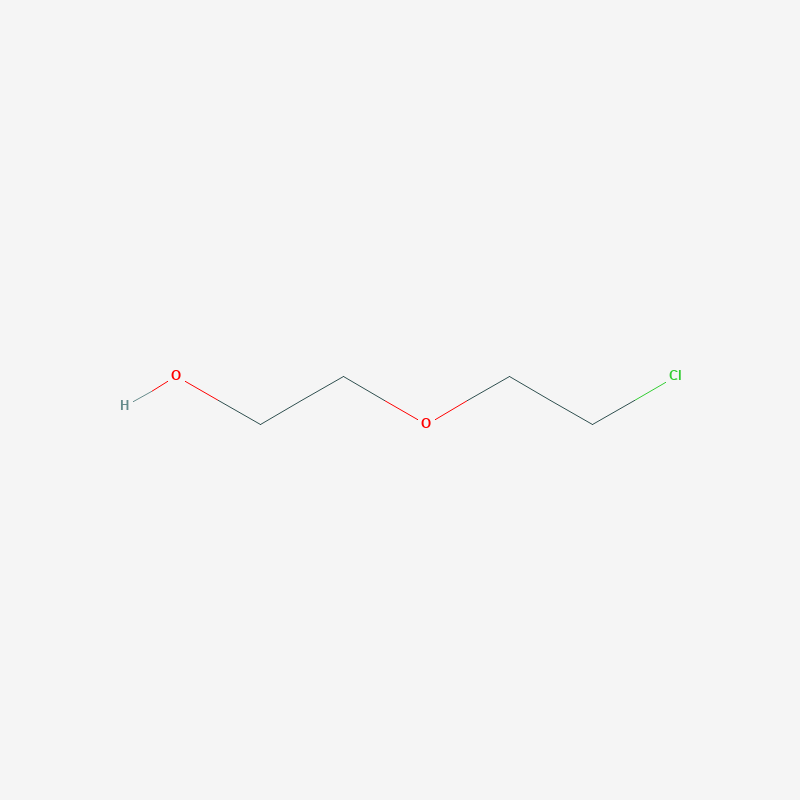
2-(2-Chloroethoxy)ethanol
Purity : >98.0%(GC)
CAS No.: 628-89-7
EC No.: 211-059-9
EC Name: 2-(2-chloroethoxy)ethanol
ECHA Name: 2-(2-chloroethoxy)ethanol
Synonyms:
2-(2-CHLOROETHOXY)ETHANOL
628-89-7
Ethanol, 2-(2-chloroethoxy)-
Diglycol chlorohydrin
Diglycol chlorhydrin
Specification & Properties
Specifications:
| Appearance | Colorless to Light yellow clear liquid |
| Purity(GC) | min. 98.0 % |
Properties:
| Boiling Point | 185 deg.C |
| Flash point | 107 deg.C |
| Specific Gravity (20/20) | 1.18 |
| Refractive Index | 1.45 |
| Solubility in water | Soluble |
| Solubility (soluble in) | Alcohol |
Safety & Regulations
Safety Information:
| Chemical Safety |   |
| Signal Word | Warning |
| Hazard Statements | H315 : Causes skin irritation. H319 : Causes serious eye irritation. |
| Precautionary Statements | P264 : Wash skin thoroughly after handling. P280 : Wear protective gloves/ eye protection/ face protection. P302 + P352 : IF ON SKIN: Wash with plenty of water. P337 + P313 : If eye irritation persists: Get medical advice/ attention. P305 + P351 + P338 : IF IN EYES: Rinse cautiously with water for several minutes. Remove contact lenses, if present and easy to do. Continue rinsing. P362 + P364 : Take off contaminated clothing and wash it before reuse. P332 + P313 : If skin irritation occurs: Get medical advice/ attention. |
Related Laws:
| RTECS# | KK1350000 |
Transport Information:
Hazard Classification:
Danger!
According to the classification provided by companies to ECHA in REACH registrations this substance
causes serious eye damage,
causes skin irritation and
may cause respiratory irritation.